Service 08 / 14

Instrumentation & Automation

Installation and configuration of measurement and control instruments, and automation of industrial processes, with precise measurement, automated process control, better operational efficiency and real-time monitoring.

Open control cabinet with controllers, breakers and wired terminals
  • 4main variables measured: pressure, temperature, level and flow
  • 3layers of automation: control, safety shutdown, and fire and gas

The service

Installation and configuration of measurement and control instruments for industrial processes. Procurement, supply, installation and programming of instrumentation are also part of the electrical services and instrumentation portfolio.
Service features

  • Measurement precision
  • Automated process control
  • Improved operational efficiency
  • Real-time monitoring
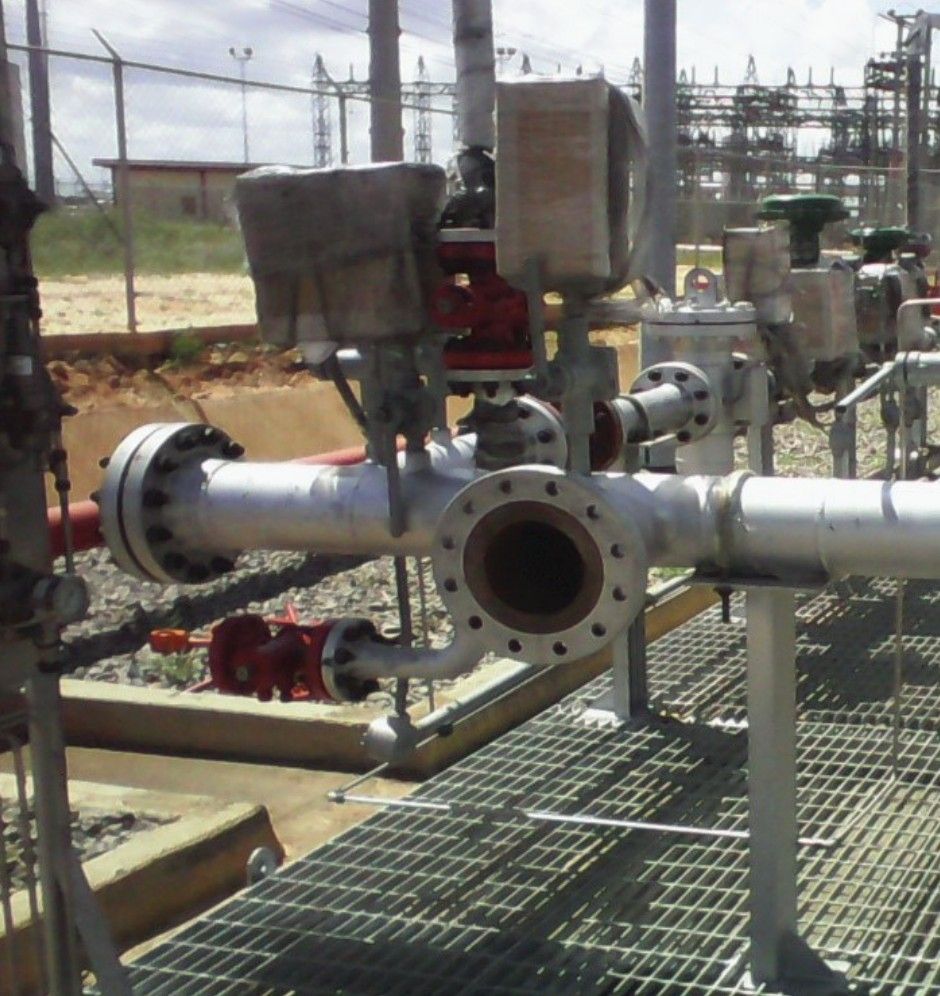
Regulation and metering station: flanged piping, valves and filters on a grating floor.
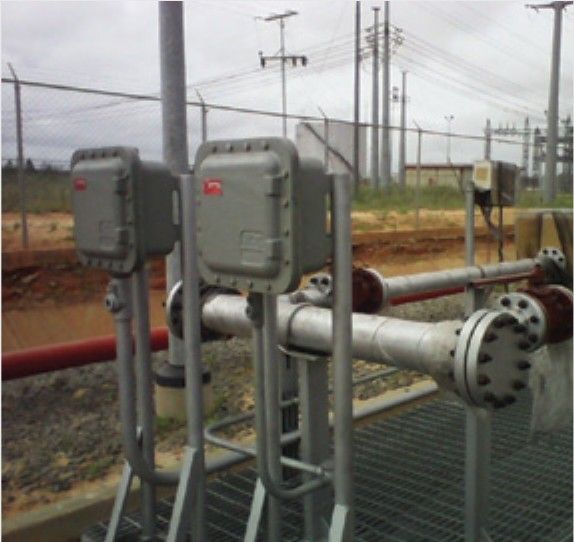
Electrical junction boxes and instruments mounted on the station piping.

What is measured and controlled

Pressure, temperature, level, flow and other physical or chemical variables, with sensors, transmitters and controllers that feed automation systems such as PLC and SCADA (common protocols: Modbus, Profibus and Ethernet/IP).

How a control loop works

Sensor

Detects the process variable: pressure, temperature, level or flow.

Transmitter

Converts the measurement into a standard signal (such as 4–20 mA, HART or a digital bus) and sends it to the control system.

Controller (PLC / DCS)

Compares the value with the setpoint and decides how to act.

Final element

A control valve, pump or drive that acts on the process to correct the deviation.

Typical instruments

Temperature

Thermocouples and RTDs.

Pressure

Pressure gauges, transducers and differential pressure sensors.

Level

Float, ultrasonic and radar.

Flow

Electromagnetic, turbine and differential pressure.

Process automation

Instruments measure; automation decides and acts. On top of the instrumentation, the automation systems run the process without constant intervention of the operator and take it to a safe state when something goes out of range.

Process control (PLC / DCS)

Programmable controllers and distributed control systems that run the control loops and the sequences of the plant.

Supervision (SCADA / HMI)

Screens, alarms, trends and historical records for the operator, on site or remotely.

Safety instrumented systems (SIS)

Independent system that shuts the process down when a variable reaches a dangerous value.

Fire and gas systems

Detection of flame, smoke and gas, with alarms and automatic actions.

What the automation covers

  • Advanced control of process variables
  • Automatic start-up and shutdown sequences
  • Fire and gas systems
  • Programming and configuration of controllers and operator screens
  • Integration of field instruments, communications and telemetry

See engineering and consulting capabilities

Implementation stages

  1. Needs analysis

  2. Design and engineering

  3. Equipment selection

  4. Installation and calibration

  5. PLC/SCADA integration

  6. Training and maintenance

    Training, with preventive and corrective maintenance.

Field installation

The installation covers everything between the process and the control room:

  • Location and mounting of instruments: process connections, supports, thermowells and manifolds
  • Impulse lines and instrument tubing
  • Cable trays, conduits, junction boxes and cabling
  • Grounding and shielding of signal cables
  • Installation in hazardous areas, according to the area classification

Calibration and commissioning

Before an instrument is accepted, it is calibrated against a reference of higher accuracy and the result is recorded. Then the whole loop is verified.

  • Calibration with traceable references and calibration certificates
  • Loop checks from the field instrument to the control room screen
  • Tests of alarms and shutdown functions (interlocks)
  • As-built documentation and calibration records

Preventive and corrective maintenance

Instruments drift over time and must be kept in check:

  • Calibration schedule defined for each instrument according to its criticality
  • Inspection of connections, seals, cabling and enclosures
  • Replacement or repair of faulty instruments, with the loop checked again
  • Use of the self-diagnostics of smart instruments to anticipate failures

In oil facilities

Telemetry and SCADA monitoring provide real-time supervision of wells and equipment, reduce response time to failures and improve safety by detecting overpressure, overtemperature or leaks and triggering alarms.

Reference standards

Reference standards commonly applied in the sector. They are listed for orientation and do not replace the specification of each project.

ISA-5.1
Instrumentation symbols and identification.
IEC 60079
Equipment for explosive atmospheres.
IEC 61511
Functional safety: safety instrumented systems for the process industry.
IEC 61131-3
Programmable controllers: programming languages.
ISA-18.2
Management of alarm systems for the process industries.

Request a quote

Need this service for your operation?

Tell us what you need and our technical team will prepare a proposal for you.