
Desert
Heat and sand.
Service 03 / 14
Laying of flow lines, oil pipelines and gas pipelines in accordance with the technical specifications of each project and standards such as API 1104 or ASME B31.3, B31.4 and B31.8, in compliance with safety standards.

Laying of flow lines, the pipes that carry the production of each well to the manifold or the flow station, and of the oil and gas pipelines that transport it from there.
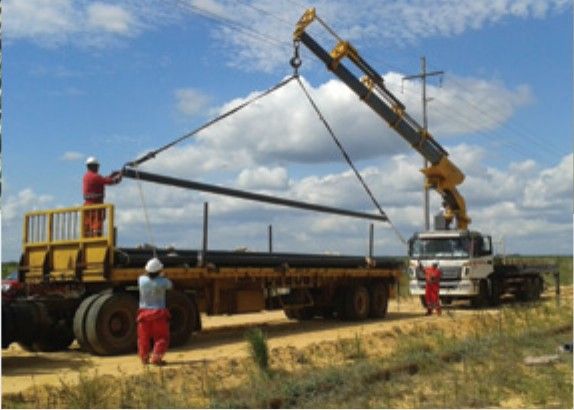
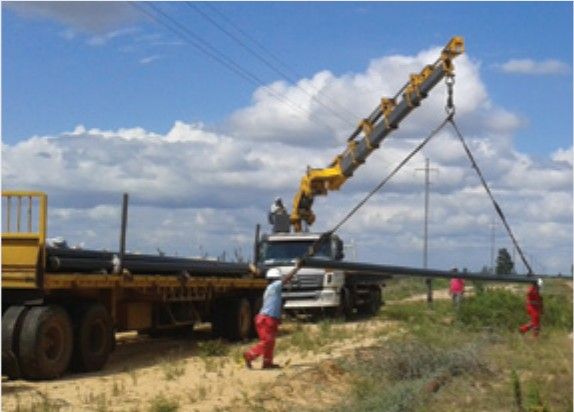
Terrain and route studies, environmental impact assessment and consultation with landowners and communities.
Steel, plastic or composite pipe, with coatings such as fusion-bonded epoxy (FBE) and fittings such as valves and flanges.
Trenching and excavation (or directional drilling in difficult terrain), welding and joining of sections, backfill and compaction, and hydrostatic testing to verify tightness.
Final inspection of the line and putting it into service.
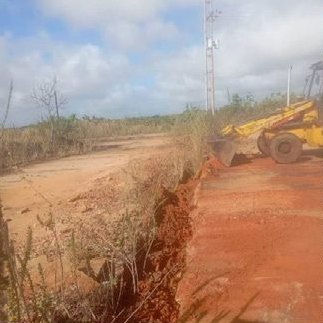
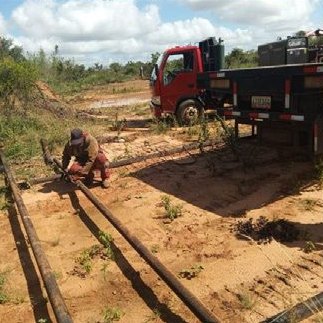
The method changes according to the environment:
Heat and sand.
Slopes and erosion.
Platforms or mats.
Coordination with authorities and traffic, and trenchless technologies such as horizontal directional drilling.
The type of line and the fluid it carries define the code that governs its design and construction: ASME B31.4 for liquids, ASME B31.8 for gas and ASME B31.3 for the piping inside stations and plants. Field welding follows API 1104.
Connect the wellhead with the production facility (manifold or flow station) and carry the fluid that the well produces.
Move crude oil or products between facilities, storage and terminals, usually over longer distances.
Carry natural gas from production or treatment to plants and consumers, with stricter requirements on pressure, location and safety.
In more detail, the construction of a line follows this sequence:
Clearing, grading and marking of the strip where the line will go, with access roads for equipment.
Pipe is unloaded and distributed along the route; bends are made to follow the terrain.
Sections are aligned and welded under a qualified procedure; the joints are inspected, usually with non-destructive testing.
The bare area around each weld is cleaned and coated to continue the protection of the pipe.
The trench is excavated, the pipe is lowered in with cranes or side-booms and then covered and compacted.
Roads, rivers and other lines are crossed by boring or directional drilling, according to the terrain.
The line is filled with water and pressurized above its operating pressure, holding it for a set time while pressure is recorded.
Pigs are run through the line to remove debris and check the internal diameter; the line is dried when required and then put into service.
Corrosion is the main long-term threat to buried steel lines, so protection is part of the design from the start:
The hydrostatic test verifies the strength of the line and the tightness of its joints before it receives product. Once the line is in service, integrity is maintained with periodic inspection, in-line inspection with instrumented pigs and monitoring of the cathodic protection system.
Reference standards commonly applied in the sector. They are listed for orientation and do not replace the specification of each project.
Request a quote
Tell us what you need and our technical team will prepare a proposal for you.