
Workover
Major intervention with a rig to repair or replace the completion of the well.
Service 01 / 14
Rehabilitation and maintenance of oil and gas wells through five lines of work: workover, coiled tubing, slickline, electric wireline and well testing. Together they make it possible to diagnose a well, correct what limits it and return it to production.

Few wells produce without interruption from the first day until their abandonment. Equipment wears out, tubing leaks, sand, scale or paraffin build up, and the conditions of the reservoir change. Well rehabilitation and maintenance brings together the operations that diagnose those problems and correct them, to recover production and keep the well safe.
Major intervention with a rig to repair or replace the completion of the well.
Continuous pipe run into the live well to circulate, clean out, stimulate and mill, without a rig.
Mechanical work inside the well with a steel wire, without killing the well.
Logging, perforating and setting of tools with a conductor cable and real-time data.
Measures what the well produces and how the reservoir responds.
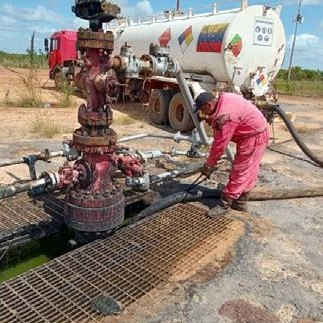
A workover is a major intervention: the well is killed with fluid, the wellhead tree is removed, blowout preventers are installed and the production tubing and the completion are pulled out with a rig. It is used when the problem cannot be solved through the tubing.
Review of the well history, tests and logs; work program with objectives, fluids, equipment and risks.
Preparation of the location, move of the rig and its auxiliary equipment, and rig-up.
The well is controlled with kill fluid, the tree is removed and the blowout preventers are installed and tested.
Tubing, rods, pump and downhole equipment are pulled out and inspected.
Cleanout, repairs, cementing, perforating, stimulation or recompletion, according to the program.
The completion and the lift system are run in; the wellhead is installed and tested.
The well is put back on production and tested to confirm the result.
Coiled tubing is a continuous length of steel pipe, wound on a reel, that an injector head pushes into the well through the production tubing. It works with the well under pressure and, unlike a wire, it lets fluids be pumped through it at any moment. It sits between wireline and a workover: it does what a wire cannot do, without bringing in a rig or pulling the completion.
Slickline is a single strand of steel wire, without electrical conductors, that runs tools in and out of the well from a winch unit. It works with the well under pressure, so production is interrupted only briefly, and it is the quickest and most economical way of doing mechanical work downhole.
Electric wireline uses a cable with electrical conductors that powers the downhole tools and sends their readings to surface in real time. It is used when the job needs measurements, depth precision or electrical activation.
A well test is a planned set of measurements that shows how much oil, gas and water a well produces and at what pressures. It is the basis for deciding whether a well needs an intervention and for checking, afterwards, whether the intervention worked.
The usual path goes from the least to the most invasive: test the well, diagnose with slickline or electric wireline, solve with coiled tubing what can be solved through the tubing, and go to a workover only when the problem requires it. Each decision weighs the cost of the intervention against the production it is expected to recover.
Reference standards commonly applied in the sector. They are listed for orientation and do not replace the specification of each project.
Request a quote
Tell us what you need and our technical team will prepare a proposal for you.